| Prof. Huaping Sun Shandong University of Finance and Economics, China Sun Huaping has presided over several major projects funded by the National Social Science Foundation and the National Natural Science Foundation of China. He has published numerous papers in domestic and international academic journals. He serves as an editorial board member or a young editorial board member for journals such as "China Finance Review International", "Journal of Digital Economy", "Green and Low-Carbon Economy", "Carbon Footprint", and "China Population, Resources and Environment". Has been consecutively selected as a highly cited researcher by Clarivate Analytics, a top 2% scientist in the world by Stanford University, and a highly cited Chinese researcher by Elsevier, etc. Research Area: Energy Economics and Environmental Management, Digital Economy and Sustainable Development, Industrial Organization and Global Value Chain Speech Title: From Technology to Organization: How Artificial Intelligence Enables Corporate Green Transformation Abstract: As the primary micro-entities in achieving sustainable development goals, enterprises face the strategic imperative to reconcile environmental responsibility with competitiveness. Although artificial intelligence technology (AIT) has been recognized for its potential to enhance efficiency and innovation, whether and how it can substantively drive corporate green transformation (GT) remains uncertain. Artificial intelligence technology is often treated as a homogeneous technological tool, overlooking the heterogeneous effects of different AIT subtypes and the strategic mechanisms through which they shape GT. Grounded in dynamic capabilities theory and socio-technical systems theory, this study conceptualized AIT as both a technological enabler and a strategic capability embedded within organizational structures and institutional contexts. Using patent-based knowledge networks and textual analysis, we measured the AIT capabilities and GT performance of 2,218 Chinese listed firms from 2014 to 2024, systematically investigating AIT’s impact, mechanisms, and moderators. The following three main results were obtained. (1) Artificial intelligence technology significantly promotes GT, with the magnitude of effects following the descending order of decision-control, perception-oriented, and platform-based to foundational algorithmic AITs, while for industry-specific AIT, there was no clear effect. (2) Artificial intelligence technology facilitates GT through four mechanisms: improving the motivation and capability of green mergers and acquisitions, optimizing the labor-capital-energy allocation, enhancing the utilization efficiency of traditional and data factors, and strengthening green management by fostering green office practices, reducing green agency costs, and mitigating internal control deficiencies. (3) Green knowledge and government–firm ties further reinforce AIT’s contribution to GT. This study moved beyond a technological perspective to show how AIT is embedded in the green development of firms and their operational logistics, highlighting how technological diversity shapes its effectiveness. The findings underscore AIT’s strategic value in decision-making and call for collaborative efforts from firms and governments to foster a green culture and create sustainable ecosystems. |
 | Prof. Shigui Tao Nanjing Normal University, China Shigui Tao, a Level-II Professor and Doctoral Supervisor at the School of Business,Nanjing Normal University, is a member of the Communist Party of China.He concurrently serves as Vice President of the Chinese Society of Development Economics; Deputy Director of the Expert Committee of the China Association of Local Finance; Standing Council Member of both the Chinese Society for the Study of Foreign Economic Theories and the World Economic Development Society;and Member of the Judging Committee for the National College Student Market Research and Analysis Competition. A long-term focus on teaching and research in finance emphasizes international economic and financial security, with work pioneering new frontiers in financial studies and contributing to the advancement of national security studies and regional studies. Research leadership covers one major, one key and one general National Social Science Fund project, as well as four provincial and ministerial-level social science projects. Over 300 academic papers have been published in journals including Financial Research, with more than 20 reprinted in Renmin University's Periodical Reprint Materials. Academic output includes four authored monographs and contributions to three textbooks. More than ten teaching cases have been included in national and provincial case repositories.Awards received include the First Prize in the Jiangsu Provincial Teaching Achievement Award (Higher Education Category) and two Jiangsu Provincial Educational Science Research Achievement Awards. Honors also encompass the Nanjing Normal University Outstanding Contribution Award, the Teaching and Education Award, the Outstanding Communist Party Member Exemplar, the Hong'ai Elite Teacher Award,the Advanced Individual in Teacher Ethics Award,and the Outstanding Graduate Advisor Award (Twice). Speech Title: The "Impossible Trinity" of USD and the New Path for CNY Internationalization. Abstract: The USD, as an international currency, partially performs the functions of a "global currency", underpinned by international credit. However, the dollar is simultaneously a debt-based currency and a sanctions-driven currency, two attributes that severely undermine its international credit. This "impossible trinity" of the dollar has fueled the global trend of "de-dollarization". China should seize this favorable opportunity, leverage the unique advantages of the CNY, and forge a new path of CNY internationalization with Chinese characteristics, thereby promoting the new "Dual Circulation" development paradigm and high-quality economic growth in China. |
 | Prof. Junfeng Liao South China University of Technology, China Junfeng Liao, Professor, PhD in Management, Master's Supervisor, Doctoral Supervisor, and Postdoctoral Collaborative Supervisor in the Department of E-commerce at South China University of Technology. Hosted 2 National Philosophy and Social Science Fund projects, 6 provincial and ministerial level projects, and over 10 other horizontal and vertical scientific research projects. Speaker of the first batch of national first-class undergraduate courses, Guangdong Province first-class undergraduate courses, Guangdong Province high-quality video open courses, and Guangdong Province undergraduate characteristic demonstration classrooms. Research fields include: big data management and application (big data marketing, data asset management, digital operation, etc.), e-commerce (online marketing, brand management, Internet finance, cross-cultural consumer behavior, etc.). Published over 50 papers in high-level international academic journals such as SSCI Q1 Top, SCI Q1, CSSCI, EI, and Core in management, information science, business, economics, and engineering, as well as domestic academic journals and conferences. Also served as a reviewer for high-level academic journals such as Nankai Management Review, Journal of Management, and Journal of Retailing and Consumer Services. Published 3 textbooks and monographs. Speech Title: Which Direction Will Internet Word-of-Mouth (IWOM) Choose? Dance Drama IWOM's Spatio-temporal Characteristics and Influencing Factors Abstract: The form of internet word-of-mouth (IWOM) is diversified. Compared with the movie IWOM with concentration, the retail IWOM with continuity, and the accommodation and catering IWOM with locality, the dance drama IWOM is special in time and space due to the performance form of offline single-threaded touring. Dance drama has a special cultural output function, so it cares more about potential development value (e.g., online buzz, attention, etc.) than apparent sales revenue (e.g., sales, box office, etc.). To explore the IWOM generated by dance dramas with special spatio-temporal characteristics, this paper constructs two vector autoregressive models (VAR) for megacity behemoths and other cities and investigates the dynamic relationship between IWOM reviewer characteristics, rating characteristics, and online buzz. The results of the study show that in terms of spatial characteristics, dance drama IWOM shows significant differences in different city types, and the relationship between IWOM reviewer characteristics, rating characteristics, and online buzz is causally inverted in megacity behemoths and other cities; in terms of temporal characteristics, dance drama IWOM shows long-term and fluctuating characteristics, and the duration cycle of dance drama IWOM is about 10 months; In terms of spatio-temporal joint characteristics, the spatial distribution of dance dramas IWOM and dance drama background culture remained consistent. Specifically, Thousands Miles of Mountains and Rivers IWOM has chosen to go south to north, but for the Spring Festival Gala IWOM has chosen to go east to west. |
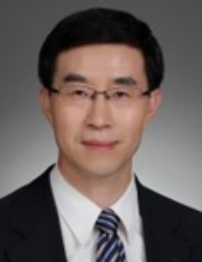 | Prof. Runhui Lin Nankai University, China Ph.D. in Management Science and Engineering (Tianjin University), Postdoctoral Fellow in Business Administration (Nankai University), Visiting Scholar (Harvard University). Currently Professor, Doctoral Supervisor & Vice Dean of Business School, Nankai University; Director of Network Governance Research Center, China Academy of Corporate Governance. Long devoted to teaching and research in IT & management innovation, network governance & innovation, information security governance, and multinational corporate governance. He has published over 210 papers in Chinese and English, 16 monographs/co-authored works, and won 15 academic awards from the Ministry of Education and professional organizations. Selected into programs including MOE New Century Excellent Talents, Tianjin 131 First-Tier Innovative Talents, and MOE Innovation Team. He has led 10 national/provincial ministerial projects, such as the Key Program of NSFC and Major Program of MOE Key Research Base for Humanities & Social Sciences. Speech Title: Green Governance Capability for Sustainable Development of Multinational Enterprises Abstract: Against the backdrop of global shifts and mounting environmental challenges, multinational corporations (MNCs) are confronted with both risks and opportunities. The Synergistic Governance System of the Five Greens for MNCs integrates Decision-Making Green, Financial Green, Social Green, Natural Green, and Behavioral Green into a cohesive framework. This system not only acts as an actionable guide for Chinese MNCs to realize sustainable development and participate more effectively in global competition, but also serves as an institutional public good for reshaping global economic governance. It empowers Chinese MNCs to convert environmental constraints into competitive edges, balance economic growth, social responsibility and ecological conservation, and play a pivotal role in advancing the global low-carbon sustainable transition. |
